Catching up with this densely textured and satisfyingly Higgins-y smuggling thriller, virtues not surprising when you consider the source.


Catching up with this densely textured and satisfyingly Higgins-y smuggling thriller, virtues not surprising when you consider the source.
Edifyingly, the new season of "Homeland" (Channel 4) had chosen just this time to appear, as if to prove that an international action series can have a plot full of holes and still be 10 times better than "Hunted."
Saw this on the plane on the way home from China. Not half bad.
Not enough footage in this trailer of the great Kara Hui Ying-hung...
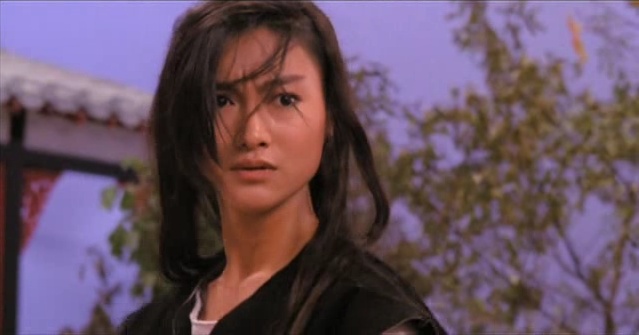
...who dances with Donnie in the film's best fight:


Chute, David. Film Comment 34. 6 (Nov/Dec 1998): 62-65.
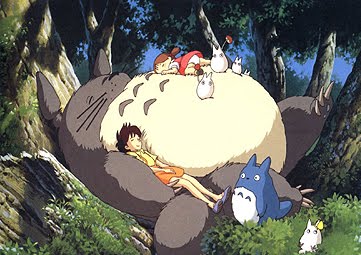
The Japanese eco-fantasist Hayao Miyazaki is an animation magiclan, a crowd-pleasing storyteller who is also a builder of worlds. He designs meticulously engineered imaginary aircraft, sets their perfect gears spinning, and propels them over mossgreen rolling landscapes, zipping between the sprung columns of ruined castles. He uses animation in a refreshingly direct and intuitive way, reveling in its capacity to lift things off the ground.
(Olivier) Megaton’s dazzling style (at its best in "Transporter 3" and "Colombiana") goes back to D.W. Griffith’s use of cross-cutting–basic stuff but Mills’ fight with hooligans while his wife is tortured and his daughter is chased along the rooftops of Istanbul really works. His technique provides a visceral and ethical exercise. When Mills confronts his nemesis (Rade Serbedzija), the call for “Justice!” gets corrected: “You mean revenge!” This essence is like what Costa Gavras’ most complex film explored (1970’s "The Confession" about Communist show trials). Beyond the political and religious surface of seeing Americans under siege, "Taken 2" exposes the politics of vengeance, the rationalizing of immorality. This was also the good theme of Neveldine-Taylor’s brilliant "Ghost Rider 2: The Spirit of Vengeance" (also underrated).
David Mitchell writes about the movie of his novel "Cloud Atlas," about which some crabby people have had reservations:
I met the three directors in 2008, and their plan to foreground the novel’s “transmigrating souls” motif by having actors perform multiple roles (each role being a sort of way station on that soul’s karmic journey) struck me as ingenious....
Perhaps where text slides toward ambiguity, film inclines to specificity. A novel contains as many versions of itself as it has readers, whereas a film’s final cut vaporizes every other way it might have been made. Funny thing is, not even the author is immune to this colonization by the moving image. When I try to recall how I imagined my vanity-publisher character, Timothy Cavendish, before the movie, all I see now is Jim Broadbent’s face smiling back, devilishly. Which, as it happens, is fine by me.
Dennis Lehane again teaches us the lesson:
In the Boston neighborhood where I grew up, people talked vividly. Lots of f-bombs, lots of italicizing, lots of words purposefully dropped from a sentence because they got in the way of the meaning or the punch line. To grow up around such wonderful, profane, exuberant dialogue is to have a found poem dropped in your lap every day before you've even finished the walk to school. So, when I began my apprenticeship as a writer, the only gift I brought to the table was an ear for dialogue bequeathed to me by constant exposure to Olympian-level talkers. That's given me a lifelong love of colorful gab, both as a reader and writer.Dialog trumps story -- Always thought that myself (see I. Compton-Burnett), and am glad to see Lehane admitting that the rule of simplicity is just begging to be broken....
In Richard Price's urban masterpiece, "Clockers," two New Jersey cops sit in the bowels of a housing development and tell stories to each other. The scene goes on for pages and, in truth, adds little to the overall plot. But the dialogue is so pitch-perfect an urban symphony, and so hilarious, that it effortlessly crosses the transom of the utilitarian standard and transcends any rules that would box it out of a novel. If everyone could write dialogue as gutter-gorgeous as Mr. Price, they could write a hundred pages before any reader started asking if a story was going to appear anytime soon.
(Ford) made it hard for himself by ensuring that his magnum opus would be as hard to read as possible. The Americans have always liked "Parade’s End" better than the British, but that could be because the style has the word “modern” written all over it. Tom Stoppard’s adaptation reconstitutes the passionate story that Ford almost bleached out in the light of flashbacks and flashes forward.

Perhaps not surprisingly, the Wall Street Journal has very good things to say about Carl Barks and Scrooge McDuck in a review on Saturday of the latest installment in the Fantagraphics Barks set. Also, as a throwaway reference to a "midcentury student of America's vernacular arts" (whom I really should look up), the critic -- Tim Marchman -- provides a precise statement about the elements of a great deal of what we all love.....
The stories in this collection range from perfect one-page gag strips to 30-page features so packed with incident that they would have to be trimmed to be adapted as films. They're about love, greed, the settlement of the West, what happens when modern ducks meet pre-modern cultures, and more. They're also about the American way of storytelling, in which rigid discipline can make abrupt transitions seem natural and inevitable: from money hidden in¬spinach cans to Beagle Boys in robot suits to an entire society of invisible native spirits hidden along the beaches of Hawaii.John A. Kouwenhoven, the great midcentury student of America's vernacular arts, had a theory about what makes the country's native art forms unique: The key to such achievements as jazz and the skyscraper, he suggested, was a tension between order—as seen in the gridiron pattern superimposed on a continental scale from cities to farms—and a spontaneous, discontinuous rhythm felt in everything from the way Mark Twain spins a yarn to Walt Whitman's prosody. He identified comics, "which come to no end demanded by symmetry or proportion," as a special example. Carl Barks's creations show you exactly what he meant.
Good Faith (Jane Smiley)
- Highlight Loc. 3695-99 | Added on Tuesday, September 18, 2012, 03:56 PM
“It’s simple,” said Dale, “but it’s not easy. Here’s what they did. They made all these panels and moldings by hand, with hand planes. That way, if anyone made a mistake, it would only be a thirty-second of an inch mistake, and he could rub it out, no problem. This is beautiful, painstaking work. It’s always harder to make something simple look right than to make something elaborate look right.”
==========


==========
Death of a Red Heroine (Soho Crime) (Qiu Xiaolong) - Highlight on Page 212 | Loc. 4177-88 | Added on Tuesday, August 28, 2012, 08:33 AM
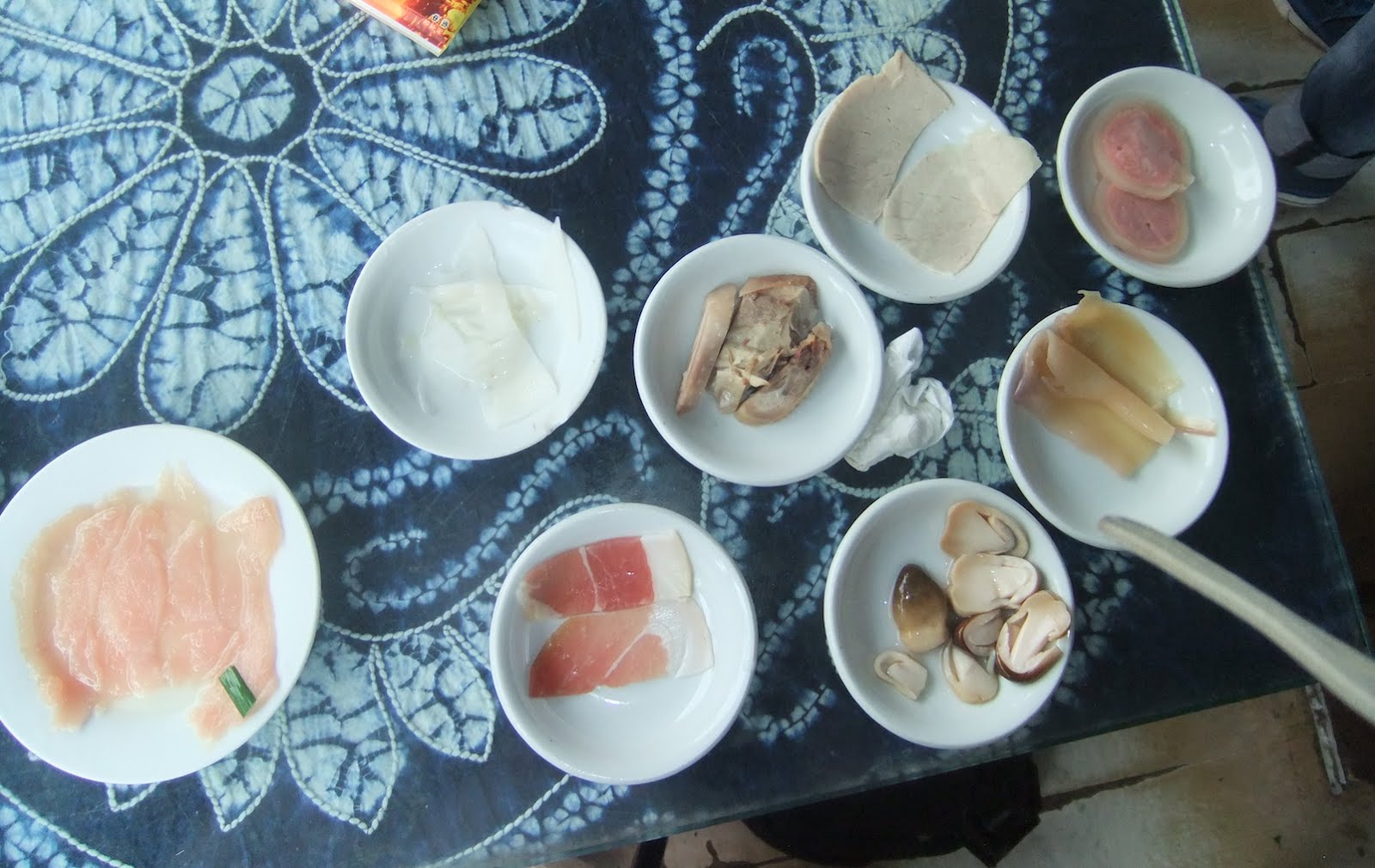
“Across-the-bridge-noodles—I think I’ve heard of that unusual dish.” Chen showed a gourmet’s curiosity. “Or I have read about it somewhere. Very special, but I have never tasted it.”
“Well, here’s the story about it.” Yu found himself explaining. “In the Qing Dynasty, a bookish husband studied in an isolated island cottage, preparing for the civil service examination. His wife made one of his favorite dishes, chicken soup with noodles. To bring the noodles there, his wife had to cross a long wooden bridge. When she got there, the noodles were cold, and had lost their fresh, crisp taste. So the next time she carried two separate bowls, one bowl of hot soup with surface layer of oil to keep the heat in, and one bowl of rinsed noodles. She did not mix the noodles with the soup until she was in the cottage. Sure enough, it tasted wonderful, and the husband, feeling energetic after finishing the noodles, did a good job of preparation, and succeeded in the examination.”
“What a lucky husband,” Chen said.
“And Peiqin’s an even better chef,” Yu chuckled.
Yu, too, had enjoyed the noodles, the soup rippling with the memories of their days in Yunnan.

 Posts
All Comments
Posts
All Comments


