
========== Howards End (Classic Literature) (E.M. Forster)- Highlight Loc. 450 | Added on Saturday, December 29, 2012, 07:09 AM
Her conclusion was, that any human being lies nearer to the unseen than any organisation, and from this she never varied.
Sunday, January 6, 2013
Epigraph


Friday, January 4, 2013
Thursday, January 3, 2013
Archive: "Ghost in the Shell"
The Soul of the New Machine
Film Comment, September, 1996.
"Then she got into the lift, for the good reason that the door stood open; and was shot smoothly upwards. The very fabric of life now, she thought as she rose, is magic. In the eighteenth century we knew how everything was done; but here I rise through he air; I listen to voices in America; I see men fly---but how it's done, I can't even begin to wonder. So my belief in magic returns." ---Virginia Wolf, "Orlando."
Arthur C. Clarke was the another wise person who noticed that technology, sufficiently advanced, would be indistinguishable from magic. The master Japanese manga creator Shirow Masamune shares this view: "Science," declares a character in Shirow's early cyberpunk graphic novel "Appleseed," "is the new black magic."
In "Ghost in the Shell," the animated film version of a later Shirow work, a gifted director, Oshii Mamoru, invests the author's futurism with a quality of the uncanny, as if our awe before technological advancement has gone full circle and become, instead, indistinguishable from superstition.
Archive: Tamil Cinema's Rathnam, Rahman and Hasan
When Gods Walk the Earth
This was the first article I wrote about Indian popular cinema. It appeared in the January-February 1995 issue of Film Comment, with the fairly presumptuous sub-head "Idiom and Archetype in Indian Cinema Today." The piece is transcribed here almost exactly as it was published, gaffes and all. Some updates, upgrades, and second thoughts have been tacked on as footnotes.
Wednesday, December 26, 2012
A few words...
...about the creative process:
"Things come into the mind and wait to hook up with other things."See also: "Whatever talent I have for writing lies in being friends with my head."-- Russell Hoban, "Afterword," "Riddley Walker: Expanded Edition" (Indiana 1998).
Sunday, December 16, 2012
Now you tell me...
"It's tempting to give up on our liberal studies before even making the attempt, the better to continue on our merry way, fighting, drinking, and all the rest. At least, then we we have the satisfaction of a little short-term pleasure instead of a lifetime of feeling inadequate."More excellent Smith here. I've been shying away from this writer for years, fearing either the Second Coming of Rushdie (Multi-Culti Magic Realism) or a new addition to the Hitchens/Amis Patronizing Smarty Pants School. But I've loved a couple of her recent essays.-- Zadie Smith, "Some Notes on Attunement," "The New Yorker," December 17, 2012, 30-35.
My other source of daily pleasure is—but I wish I had a better way of putting it—”other people’s faces.” A red-headed girl, with a marvelous large nose she probably hates, and green eyes and that sun-shy complexion composed more of freckles than skin. Or a heavyset grown man, smoking a cigarette in the rain, with a soggy mustache, above which, a surprise—the keen eyes, snub nose, and cherub mouth of his own eight-year-old self.As a paragraph written by a novelist this is promising. Last week I dug out the copy of "White Teeth" I've owned for something like fifteen years. Any day now...
Wednesday, December 12, 2012
Sunday, December 9, 2012
Covers
These cool clips are being posted around to celebrate the publication of a book that looks like an HBO series waiting to happen.
Est-ce Que Tu Le Sais - Scopitone Sylvie Vartan by samandari
Tuesday, December 4, 2012
Baxter on Black and Banville
The author of "A Feast of Love" on the novelist who is both the literary eminence John Banville and the would-be thriller purveyor Benjamin Black, who each have new books out.
A reading of the two books, the Banville novel and the Black novel, might inspire in some readers a consideration of the way that plot on the one hand and eloquence on the other have taken their leave of each other and have set up separate realms, if that is indeed what has happened. But the real mystery at the center of these books has more to do with the question of how to freeze time so that it partakes of the eternal, which is Banville’s true subject, and with the problem of consequences of actions in the here and now, which is Black’s. Eloquence is not the point of [Black's] "Vengeance," though it contains passages of verbal legerdemain, and plot is almost irrelevant in [Banville's] "Ancient Light," although it contains a surprise ending.A larger distinction can be inferred between literary novels that seek to "freeze time so that it partakes of the eternal" and entertainments, which exploit a sense of time rushing onward to generate excitement. While there could be cases in which the merely stiff or frozen is mistaken for the timeless, the association of the temporal and the contingent is pretty well locked in; a key issue for us OG liberal artists.
UPDATE: I think the distinction between stop-time novels that seek stasis and/or the eternal and "temporal" plotty ones is too suggestive to be reduced to an art vs. entertainment squabble. Slowing time down to an extreme close-up crawl or speeding it up to gets hearts racing aren't the only alternatives. Some of our favorite books, from "War and Peace" to "A Suitable Boy," somehow manage to evoke the exact, flowing, forward pace of life, without hype in either direction.
Monday, December 3, 2012
Uplift...
He almost gave up [bicycle riding] after a week. But then Doc Barkhuizen gave him the "five-minute" tip. "This is what I do, Benny. If I'm not in the mood I tell myself, 'just five minutes,' and if I don't feel like going on, I'll turn around and go back home." He tried it -- and never once did he turn around. Once you were going, you went on.-- Deon Meyer, "Thirteen Hours" (Grove Press 2011)
Saturday, December 1, 2012
More New Yorker validation...
Anthony Lane on the new film "Killing Them Softly:"
Why haven’t more movies stolen from George V. Higgins? He died in 1999, but his work remains a trove, begging to be raided for linguistic loot. If you want to grade postwar novelists on the strength of their ears alone—how fast they prick up at the crackle and blare of American speech—then Higgins and Elmore Leonard, you could argue, lead the pack, ahead of more distinguished names.Writing about the same film, around the same time, for the same magazine's online edition (cold looks when they pass in the hall?) Richard Brody proves himself to be a true hipster by asserting that "storytelling is the most overrated value and misattributed term in the world of moviemaking." Luckily, by the time he gets to his big finish, Brody is saying something a bit different, making a point that reflects a degree of cluelessness about how the process of film production actually works:
…this mode of bare-bones storytelling—in which a pared-down framework of facts is presented, tightly and narrowly, as if foregrounding the plot and locating all traces of character in the actors’ performance—is one of the dominant trends of contemporary filmmaking. It doesn’t just serve the goal of brisk entertainment: it reflects the desire to pass the fiction off as objective truth—in order to convey as all the more self-evident the filmmaker’s political point.Read more.
Friday, November 30, 2012
"Contraband"
Catching up with this densely textured and satisfyingly Higgins-y smuggling thriller, virtues not surprising when you consider the source.

Friday, November 23, 2012
Thursday, November 15, 2012

Wednesday, October 24, 2012
Clive sez:
Edifyingly, the new season of "Homeland" (Channel 4) had chosen just this time to appear, as if to prove that an international action series can have a plot full of holes and still be 10 times better than "Hunted."
Monday, October 22, 2012

Wednesday, October 17, 2012
See also:
Saw this on the plane on the way home from China. Not half bad.
Not enough footage in this trailer of the great Kara Hui Ying-hung...
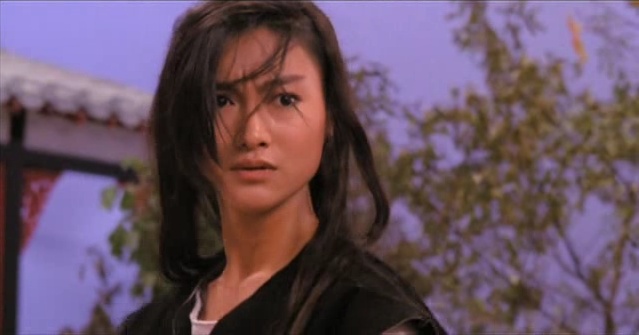
...who dances with Donnie in the film's best fight:


Thursday, October 11, 2012
Wednesday, October 10, 2012
Miyazaki flashback
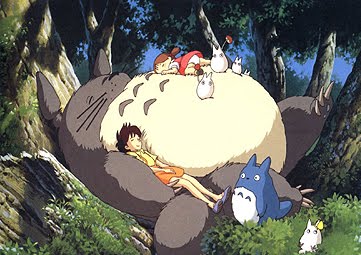
Organic Machine: The world of Hayao Miyazaki
Chute, David. Film Comment 34. 6 (Nov/Dec 1998): 62-65.
The Japanese eco-fantasist Hayao Miyazaki is an animation magiclan, a crowd-pleasing storyteller who is also a builder of worlds. He designs meticulously engineered imaginary aircraft, sets their perfect gears spinning, and propels them over mossgreen rolling landscapes, zipping between the sprung columns of ruined castles. He uses animation in a refreshingly direct and intuitive way, reveling in its capacity to lift things off the ground.
Tuesday, October 9, 2012
If you can't make it to "Resident Evil"...
(Olivier) Megaton’s dazzling style (at its best in "Transporter 3" and "Colombiana") goes back to D.W. Griffith’s use of cross-cutting–basic stuff but Mills’ fight with hooligans while his wife is tortured and his daughter is chased along the rooftops of Istanbul really works. His technique provides a visceral and ethical exercise. When Mills confronts his nemesis (Rade Serbedzija), the call for “Justice!” gets corrected: “You mean revenge!” This essence is like what Costa Gavras’ most complex film explored (1970’s "The Confession" about Communist show trials). Beyond the political and religious surface of seeing Americans under siege, "Taken 2" exposes the politics of vengeance, the rationalizing of immorality. This was also the good theme of Neveldine-Taylor’s brilliant "Ghost Rider 2: The Spirit of Vengeance" (also underrated).
Thursday, October 4, 2012
Wednesday, October 3, 2012
Tuesday, October 2, 2012
Subscribe to:
Posts (Atom)

 Posts
Posts

